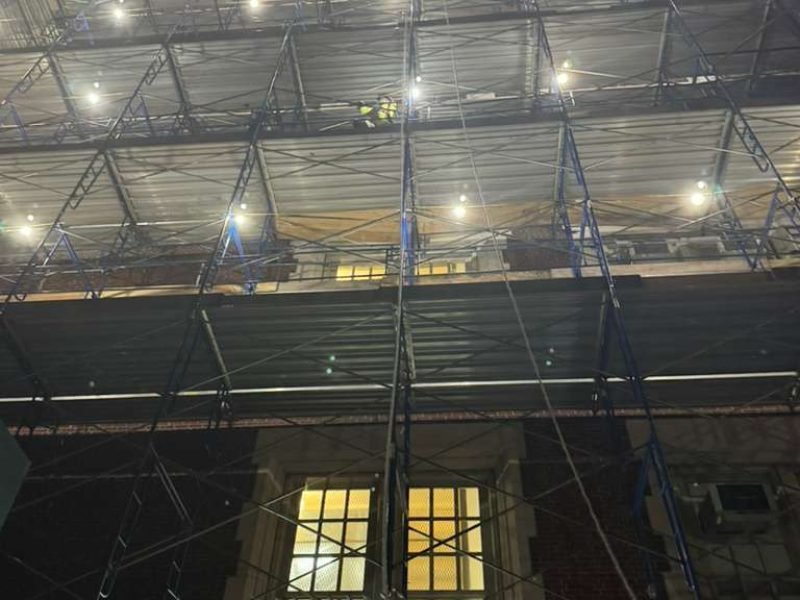
New York City runs on scaffolding. Walk down any block in Manhattan, Brooklyn, or Queens and you will see steel pipes rising along building facades, sidewalk sheds protecting pedestrians, and access platforms supporting workers dozens of stories above the street. Among the many scaffolding systems used across the five boroughs, pipe scaffolding remains one of the most trusted, adaptable, and widely specified solutions in the industry. Understanding what pipe scaffolding is, why it dominates NYC construction sites, and how it is regulated is essential for contractors, building managers, and developers who want projects that are safe, compliant, and efficient.
This guide breaks down pipe scaffolding in New York City from every angle that matters: its structure, its applications, the regulatory environment that governs it, and the factors that separate a reliable scaffolding provider from a risky one.
What Is Pipe Scaffolding?
Pipe scaffolding, sometimes called tube-and-clamp scaffolding, is a temporary structural system built from galvanized steel tubes connected by couplers, clamps, and fittings rather than pre-fabricated frames. It’s one of several core scaffolding installation methods used across the city, each suited to different building types and project scopes. Unlike modular frame scaffolding, which locks into fixed shapes, pipe scaffolding is assembled piece by piece on site. This gives engineers and scaffold erectors the freedom to design around irregular building facades, complex rooflines, staircases, overhangs, and tight urban lots — conditions that are the norm rather than the exception in New York City.
The core components include:
- Standards — the vertical tubes that transfer load to the ground or a foundation plate
- Ledgers — horizontal tubes connecting standards and forming the working level
- Transoms — cross tubes supporting the platform boards
- Couplers and clamps — fittings that join tubes at right angles, swivel angles, or in-line
- Base plates and sole boards — components that distribute weight and stabilize the structure on uneven or soft ground
- Ties and bracing — connections back to the building structure that resist wind load and lateral movement
Because every joint is assembled independently, pipe scaffolding can be configured to almost any height, shape, or load requirement, which is precisely why it remains the default choice for complex NYC building envelopes.
Why Pipe Scaffolding Dominates New York City Construction
New York City presents a scaffolding environment unlike almost anywhere else in the country. Buildings sit close together, sidewalks are narrow and heavily trafficked, facades vary enormously in age and design, and local law imposes strict requirements on public protection. Pipe scaffolding answers these constraints better than most alternatives for several reasons.
Adaptability to Irregular Facades
Pre-war buildings, brownstones, setback towers, and landmarked structures — common throughout neighborhoods served by commercial scaffolding in Manhattan — rarely have uniform, flat surfaces. Cornices, bay windows, fire escapes, and ornamental stonework all interrupt a straight vertical plane. Pipe scaffolding can be built around these features because each connection point is custom-fit rather than pre-molded, allowing scaffold erectors to navigate architectural detail without compromising structural integrity.
Load Capacity for Heavy-Duty Work
Facade restoration, masonry repair, waterproofing, and Local Law 11 (FISP) inspections often require workers to carry tools, mortar, scaffolding boards, and debris containment materials — a common scenario for commercial scaffolding in Brooklyn, where aging masonry and terra cotta facades are especially prevalent. Pipe scaffolding, when engineered correctly, can be rated for substantially heavier loads than lightweight frame systems, making it the preferred choice for restoration contractors working on aging masonry and terra cotta facades common throughout Manhattan and Brooklyn.
Height Flexibility
High-rise work in NYC frequently requires scaffolding that reaches well beyond what standard frame systems can safely support. Pipe scaffolding can be tied back to the building at calculated intervals and braced diagonally, allowing it to extend to heights that would be structurally unstable with other systems.
Sidewalk Shed Integration
Much of what New Yorkers recognize as scaffolding is actually a sidewalk shed — a covered walkway built to Department of Buildings (DOB) specifications that protects pedestrians from falling debris during construction or repair work. Pipe scaffolding integrates naturally with sidewalk shed construction because the same tube-and-clamp components used for the working scaffold above can extend down to form the protective canopy at street level.
Common Applications of Pipe Scaffolding in NYC
Pipe scaffolding is not a single-purpose product. Its applications span nearly every category of exterior building work performed in the city.
Facade Restoration and Local Law 11 Compliance New York City’s Facade Inspection Safety Program requires buildings over six stories to undergo periodic facade inspections and, where necessary, repair. Pipe scaffolding provides the stable, adjustable platform inspectors and masons need to examine and repair parapets, cornices, and brickwork at close range.
Masonry and Brick Repointing Repointing mortar joints on older buildings demands scaffolding that can be positioned precisely against the wall surface and adjusted as work progresses up the facade. Pipe scaffolding’s flexibility allows crews to maintain consistent working height without repeated disassembly.
Window and Roof Access Window replacement, roof repair, and cornice work often require scaffolding that reaches specific access points not aligned with a building’s standard floor lines. Pipe scaffolding can be shaped to reach these points directly.
Painting and Waterproofing Exterior painting and waterproofing crews need broad, stable platforms that can move horizontally along a facade. Pipe scaffolding systems support this kind of continuous horizontal access more efficiently than segmented frame units.
Demolition and New Construction Support During partial demolition or new build-outs, pipe scaffolding is frequently used to create temporary shoring, protective canopies, and access platforms that adjust as the structure changes shape over time.
Regulatory Requirements Governing Pipe Scaffolding in NYC
Scaffolding in New York City is one of the most heavily regulated construction elements in the country, and for good reason — falling debris and structural failures have historically caused serious injuries to both workers and pedestrians. Any company installing pipe scaffolding must operate within a strict compliance framework.
DOB Permits and Filings
The NYC Department of Buildings requires permits for most scaffolding installations, particularly sidewalk sheds and any scaffold exceeding a certain height or supporting significant loads. Depending on the scope, this may involve a TR1 Technical Report, filed plans, and sign-off from a licensed professional engineer or registered architect.
Local Law 196 Training Requirements
Workers who erect, dismantle, or supervise scaffolding in NYC must complete Site Safety Training under Local Law 196. Supervisors on pipe scaffolding jobs typically need 62-hour SST cards, while general workers need 40-hour cards, with additional site-specific safety training required on many job sites.
Engineering Sign-Off for Complex Structures
Pipe scaffolding erected above certain heights, carrying heavy loads, or built in unusual configurations often requires a site-specific engineering plan. A licensed engineer calculates tie-back spacing, base loading, and wind resistance to ensure the structure meets NYC Building Code requirements before installation begins.
Inspection and Maintenance Standards
Once installed, scaffolding must be inspected regularly — both by the erecting company and, in many cases, by DOB inspectors. Loose couplers, corroded tubes, missing guardrails, or inadequate bracing are common violations that can result in stop-work orders, fines, or worse, structural failure.
Insurance and Liability
Given the density of pedestrian traffic in NYC, scaffolding companies are required to carry substantial liability insurance, and building owners share responsibility for ensuring installed scaffolding meets code. Working with a properly licensed and insured scaffolding contractor is not optional — it is a legal necessity.
Choosing a Pipe Scaffolding Contractor in New York City
Not every scaffolding contractor operating in NYC has the same depth of experience with pipe scaffolding specifically. Because this system depends on correct assembly rather than pre-built modules, the skill of the erecting crew directly affects safety outcomes. When evaluating a provider, consider the following:
- Licensing and DOB registration — confirm the company is registered to file and pull scaffolding permits in NYC
- Engineering support — ask whether the company has in-house or contracted engineers for TR1 filings and structural calculations
- Track record with your building type — landmarked buildings, high-rises, and pre-war facades each present different challenges
- Site safety compliance — verify workers hold current SST cards under Local Law 196
- Insurance coverage — request proof of general liability and workers’ compensation coverage before work begins
- Maintenance and inspection protocols — ask how often the company inspects installed scaffolding and how issues are documented
A contractor with deep, borough-specific experience will be able to speak fluently about DOB filing timelines, neighborhood-specific permitting quirks, and the practical realities of working around NYC’s density — details that generic or out-of-market providers often miss.
Final Thoughts
Pipe scaffolding remains the backbone of exterior construction and restoration work across New York City because it offers something few alternatives can match: the ability to adapt to nearly any building shape, load requirement, or access challenge while meeting some of the strictest safety codes in the country. For property owners and contractors alike, understanding how pipe scaffolding works — and how it is regulated — is the first step toward a project that stays safe, on schedule, and fully compliant with NYC Department of Buildings requirements.
Whether the project involves facade restoration, Local Law 11 compliance work, sidewalk shed installation, or full building envelope access, working with an experienced, properly licensed pipe scaffolding contractor is the difference between a smooth project and a costly delay.