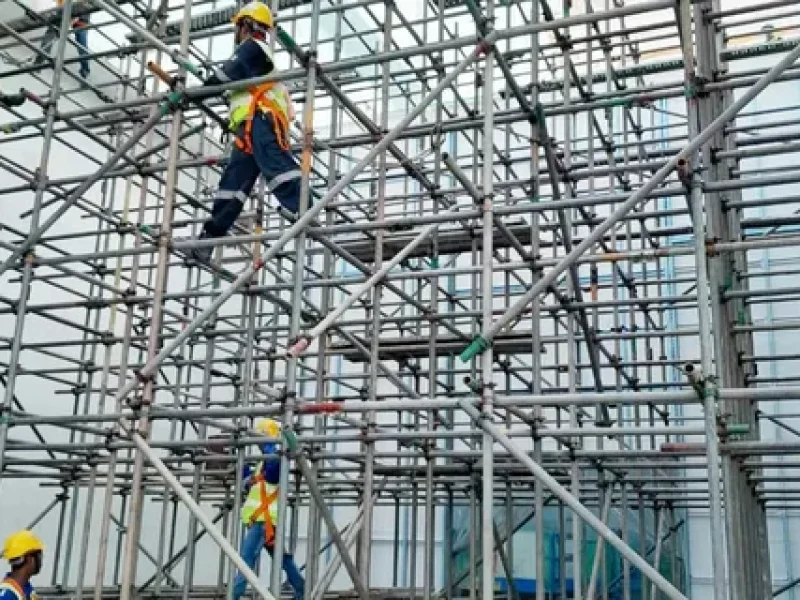
A DOB permit for scaffolding is the official authorization issued by the New York City Department of Buildings that legally allows a property owner or contractor to erect a supported scaffold or sidewalk shed on a building or sidewalk. In New York City, you must obtain this permit before erecting any sidewalk shed, or any supported scaffold that rises more than 40 feet in height. The permit confirms that the temporary structure meets the NYC Building Code, protects pedestrians, and is tracked by the city for the full duration of the work. For property owners, the permit is not optional paperwork. It is the single document that separates a compliant project from one exposed to violations, stop-work orders, and daily penalties.
This guide explains what the permit covers, when it is required, how the filing process works in DOB NOW, what it costs, and how the 2026 rule changes affect every owner managing a sidewalk shed.
What Is a DOB Scaffolding Permit and Why Do You Need One?
A DOB scaffolding permit is a work permit tied to a specific job filing for temporary construction equipment. The Department of Buildings issues it under Chapter 33 of the NYC Building Code, the section that governs safeguards during construction and demolition. The permit verifies three things: that a licensed contractor is responsible for the structure, that the design meets code, and that the city can monitor the equipment until it is removed.
Property owners need the permit for two reasons. First, it is a legal requirement. Erecting a sidewalk shed or a tall supported scaffold without an active permit is a violation that carries financial penalties and can halt the project. Second, the permit protects the owner from liability. A compliant, inspected scaffold reduces the risk of pedestrian injury, falling-debris claims, and insurance disputes. When you hire a qualified scaffolding contractor in New York, the contractor typically files for and holds this permit on your behalf, but the responsibility for the structure ultimately connects back to the building owner.
When Does NYC Require a Scaffolding Permit?
Not every scaffold triggers a permit, so the threshold matters. The Department of Buildings requires a permit in the following situations:
- Any sidewalk shed. A sidewalk shed is the overhead protective structure built over the public walkway. It always requires a permit, regardless of height, because it occupies public space and shields pedestrians.
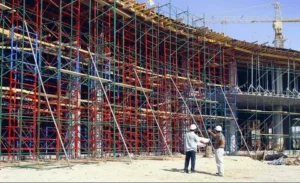
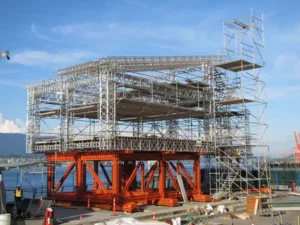
- Any supported scaffold over 40 feet in height. A supported scaffold built from the ground up that exceeds 40 feet requires its own permit. Below 40 feet, a supported scaffold generally does not need a DOB permit, though it must still follow code and safety rules.
Height is measured carefully. When a supported scaffold is staged on top of a sidewalk shed or other temporary equipment, the combined height of both structures counts toward the 40-foot threshold. When a scaffold sits on permanent construction such as a roof or setback, the measurement starts from that surface and excludes the permanent structure below.
Many sidewalk sheds in NYC exist because of façade inspection law. Buildings taller than six stories must inspect their exterior walls every five years under Local Law 11, also called the Façade Inspection Safety Program. When inspectors flag unsafe conditions, owners must install a protective shed until repairs are complete. Understanding NYC sidewalk shed requirements for Local Law 11 / FISP compliance is essential for any owner of a tall building, because the façade cycle is the most common reason a shed goes up in the first place.
The Step-by-Step DOB Permit Process
The Department of Buildings processes all sidewalk shed and supported scaffold filings through DOB NOW: Build, the city’s online filing platform. The process follows a clear sequence.
Step 1: Engage a licensed contractor. The permit holder must be a licensed contractor registered with the DOB for the relevant work type. The owner cannot pull this permit personally. Choosing an experienced installer early prevents filing errors that cause delays.
Step 2: File the PW1 application. The PW1 is the initial work application that defines the scope of work, the property, and the responsible parties. For sidewalk sheds, the PW1 now includes questions about whether the shed is connected to new building, enlargement, or demolition work, because that answer determines which 2026 rules apply.
Step 3: Submit technical details and documents. The filing includes details of the sidewalk shed or supported scaffold, dimensions, location on the sidewalk, and supporting documents. Each uploaded document starts in a pending status until the DOB reviews it. Many supported scaffold tasks can proceed without construction documents approved by a registered design professional, but façade-related sheds now require a design professional as a stakeholder.
Step 4: Pay fees and obtain the PW2 permit. Once the application is approved, the contractor files the PW2, the permit document itself, and pays the filing fees. Anyone associated with the filing can pay. After issuance, any stakeholder can print the work permit, which must be posted at the site.
Step 5: Erect, maintain, and inspect. The general contractor maintains the shed during active work. If no contractor is on site and no active work is occurring, the maintenance duty falls to the building owner. Sheds must be kept in safe condition for the entire time they stand.
Step 6: Remove and sign off. Since late 2022, a final technical inspection is no longer required for temporary construction equipment. To close the permit, the permit holder submits a removal notification in DOB NOW, which signs off the permit and issues a Letter of Completion. Sheds on major buildings require an approved removal request before dismantling. For a deeper walkthrough of every filing type, the complete guide to scaffolding and sidewalk shed permits in New York City covers the supporting filings in detail.
How the 2026 Rule Changes Affect Your Permit
The biggest shift for property owners arrived under Local Law 48 and Local Law 51 of 2025, which took effect in early 2026 as part of the city’s “Get Sheds Down” initiative. Sidewalk shed permits issued or renewed on or after February 2, 2026, carry a maximum duration of 90 days, no longer auto-renew, and require payment of a $130 renewal fee for each renewal.
The practical effect is significant. A shed that once sat under a quiet one-year permit now demands attention every 90 days. The renewal requires a progress report prepared by a licensed professional engineer or registered architect documenting that the underlying repair work is actively progressing. Owners can no longer leave a shed standing indefinitely without showing measurable progress on the repairs that justified it.
Two further points matter. Sheds installed in connection with new building, enlargement, or demolition work for which a permit has been issued are exempt from the new 90-day rules, so active construction projects are not affected. And renewals cannot be processed while outstanding DOB penalties remain unpaid, so owners should clear any open violations before a permit deadline approaches.
What Does a Scaffolding Permit Cost and How Long Does It Last?
Permit costs combine a filing fee based on the scope and value of the work plus the renewal fee structure. Under the 2026 framework, each 90-day renewal of a façade-related sidewalk shed permit carries a $130 base fee, and repeated renewals can trigger additional penalties designed to discourage sheds from lingering for years. Construction-related sheds tied to an active building permit continue under the prior expiration timeline rather than the 90-day cycle.
Duration is now the defining feature. Façade and repair sheds expire every 90 days and must be renewed with a fresh progress report. Permits issued before the February 2026 cutoff run out under the older rules but enter the new cycle at their next renewal. Owners should confirm current expiration dates now and begin arranging the required engineering report at least 30 days before any deadline.
How NYC Best Scaffold Helps Property Owners Stay Compliant
Managing a DOB scaffolding permit is now an active, ongoing responsibility rather than a one-time task. Missed 90-day deadlines lead to lapsed permits, violations, and disrupted work. Partnering with an experienced installer keeps the structure compliant from filing to sign-off. Our team handles the filing, coordinates the design professional’s progress report, tracks renewal dates, and manages the removal notification so your permit closes cleanly. Whether you need a new sidewalk shed installed and permitted or help renewing an existing one under the new rules, professional management protects both your building and your budget.
Conclusion
A DOB permit for scaffolding is the legal foundation of any sidewalk shed or tall supported scaffold in New York City. It is required for every sidewalk shed and for supported scaffolds over 40 feet, it is filed through DOB NOW, and as of 2026 it must be renewed every 90 days with proof of progress. Property owners who understand the thresholds, follow the step-by-step filing sequence, and stay ahead of renewal deadlines avoid penalties and keep their projects moving. When in doubt, work with a licensed contractor who manages the permit lifecycle from start to finish.