If you’ve got a construction, renovation, or facade repair job coming up in Brooklyn, scaffolding is probably the first thing you’ll need to sort out. It’s not just a box to check — it’s usually the first thing an inspector looks at, and it stays up until the job’s basically done. That’s why it’s worth finding a pipe scaffolding company in Brooklyn that actually knows what they’re doing.
A good crew doesn’t just show up and start bolting pipes together. They know the DOB’s requirements inside and out, they work quickly without skipping steps, and they build scaffolding that actually keeps workers, pedestrians, and the building itself safe. This guide covers what you need to know — what pipe scaffolding is, the safety rules behind it, and what to look for in a Pipe Scaffolding Company you can trust.
What Is Pipe Scaffolding, and Why Do So Many Brooklyn Contractors Use It?
Pipe Scaffolding vs. System Scaffolding
Pipe Scaffolding
Pipe scaffolding is made from individual steel tubes and couplers, put together piece by piece right on site. That’s what makes it so useful — it can be shaped to fit almost anything: irregular facades, tight lot lines, the narrow footprints you get with a lot of Brooklyn brownstones. Standard frame or system scaffolding just can’t bend that way.
System Scaffolding
System scaffolding, by contrast, uses pre-engineered, modular components that lock together quickly. It’s faster to erect on straightforward, open sites but offers far less flexibility.
Most established scaffolding companies NYC offer both, but pipe scaffolding remains the go-to choice for Brooklyn’s older buildings, tighter blocks, and projects with unusual dimensions.
Case Studies: PS 139, Brooklyn: Another Sidewalk Shed Project Done Right
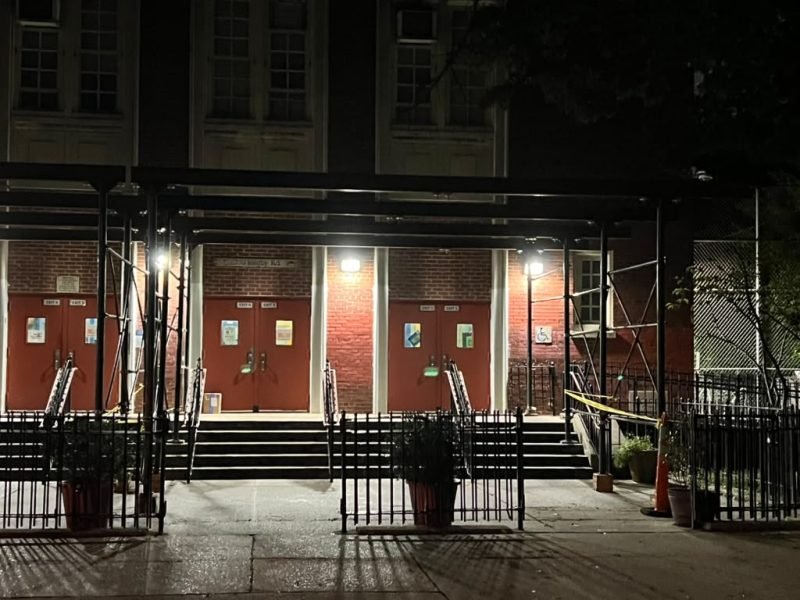
We wrapped up work at PS 139 in Brooklyn recently — a sidewalk shed and pipe scaffolding job under a public contract with the NYC School Construction Authority (NYCSCA). Nothing flashy about it, honestly. Just the kind of steady, careful work that has to happen before any of the “real” construction can even start.
Why This Job Mattered
It’s a school. Kids walk through those doors every morning, teachers park their cars out front, parents drop off and pick up on that same stretch of sidewalk. So before anyone touches the actual building repairs, someone has to put up scaffolding that’s not going to fail, and a shed that actually protects the people walking underneath it.
That’s us.
Working on a NYCSCA Contract
Because this was a NYCSCA job, there wasn’t much room for shortcuts. A few things shaped how we approached it:
- Everything had to check out against DOB code — no exceptions, no gray areas
- The school never really closes — there’s always someone on site, staff at least, even during the hours we were working
- Overnight scheduling — we did most of the heavy lifting overnight so we weren’t in anyone’s way come morning drop-off
- Marked exits stayed clear the entire time — non-negotiable on a school site, full stop
What We Left Behind
By the time we were done, the site had:
- Pipe scaffolding running along the full exterior
- A complete sidewalk shed covering the entrances and the walkway out front
- Clear, unobstructed access to every marked exit throughout the project
We swept the site, walked the whole structure one more time to make sure everything was tight, and signed off.
Why We Don’t Cut Corners on School Sites
It’s not the kind of job that gets noticed. Nobody thanks you for a sidewalk shed. But it’s the thing standing between a construction site and a kid walking to class, and we don’t take that lightly.
Public school work comes with more oversight than most jobs, more scheduling headaches, tighter tolerances — and honestly, we’d rather it be that way. Buildings full of children aren’t the place to cut corners.
Ready When You Are
Glad this one’s behind us and glad it went the way it did. If you’ve got a public project that needs a shed or scaffolding done right, that’s what we’re here for.
Prime Scaffold NYC builds sidewalk sheds and pipe scaffolding for public and private jobs all over New York City. More of our work is at primescaffoldnyc.com.
Safety Standards That Define a Trusted Scaffolding Company
Safety is the single biggest reason property owners and contractors get selective about who they hire. Anyone can bolt pipes together — not everyone can guarantee that structure holds up under real-world stress, passes inspection the first time, and keeps pedestrians on a busy Brooklyn sidewalk out of harm’s way. The best pipe scaffolding companies Brooklyn build their reputation on the details most customers never see until something goes wrong with a competitor’s job.
DOB Safety Requirements for Scaffolding
Every scaffold erected in Brooklyn falls under New York City Department of Buildings regulations, which govern everything from permitted load capacity to guardrail height and tie-in spacing. These rules aren’t arbitrary — they’re the product of decades of incident data, and they cover specifics like maximum spacing between supports, minimum plank width, required toe boards, and how scaffolding must be anchored to the building facade at regular vertical intervals.
A company offering genuine pipe scaffolding services Brooklyn should be able to walk you through which DOB code sections apply to your specific project type, not just say “we’re compliant” and leave it at that. That level of transparency is usually the clearest sign you’re dealing with a company that treats these requirements as the floor, not the finish line.
On-Site Safety Protocols and Inspection Practices
Beyond DOB paperwork, day-to-day safety comes down to habits. That means daily visual inspections before a crew even steps onto a platform, secure base plates that distribute weight evenly across the ground surface, proper diagonal and horizontal bracing at every level, and clear signage and barricades that keep pedestrians away from the work zone below.
A reliable crew documents these checks — often with dated photos or written logs — rather than treating them as an afterthought. This documentation matters for two reasons: it protects workers, and it gives property owners a paper trail if a DOB inspector or insurance company ever asks for proof that the structure was properly maintained throughout the job.
The stakes are real: the NYC Department of Buildings recorded 320 construction-related incidents involving injury or fatality across the city in 2025, including 10 worker deaths, and DOB’s own accident summaries consistently show scaffold, shed, fence, and shoring installation failures accounting for roughly 7-9% of all reported construction incidents citywide (NYC Department of Buildings).
Weather, Load-Bearing, and Structural Risk Management
Winter Season:
Brooklyn winters bring ice, snow accumulation, and sustained wind loads that can compromise an improperly secured structure.
Summer Season:
Summer storms bring their own risks, from sudden wind gusts to heavy rain that can loosen improperly compacted footings.
Fall Season:
Falls remain the leading cause of construction-related deaths in New York City year after year, accounting for the majority of fatalities tracked by DOB — a statistic that underscores why guardrails, tie-ins, and bracing aren’t optional extras but the core of what a scaffolding company is actually being hired to get right.
Severe Weather:
Experienced crews calculate load limits conservatively from the start, factoring in worst-case scenarios rather than average conditions, and they reinforce scaffolding ahead of forecasted severe weather rather than reacting after the fact.
This is also where the difference between a rushed installation and a properly engineered one becomes obvious. A scaffold that looks identical from the sidewalk can behave very differently under a 40 mph gust, depending on how well it was tied into the building and how conservatively it was loaded during design.
Speed of Installation Without Compromising Quality
Time is money on any construction site, and scaffolding sitting incomplete for days can hold up every other trade waiting to get started. But speed only means something if it doesn’t come at the cost of a properly secured structure. The companies that do this well have simply refined their process — not skipped steps in it.
Typical Installation Timeline
A standard residential job — a brownstone facade or a two- to three-story rowhouse — can often be assembled in a single day once permits are in hand and materials are staged on site. Larger commercial or multi-story installations may take two to three days, depending on building height, the complexity of the facade, and how much site access the crew has to work with (narrow Brooklyn lots and limited street parking can slow down material staging more than the actual assembly work).
Crew size also plays a role. A well-run pipe scaffolding installation Brooklyn typically involves a foreman overseeing three to five installers, which keeps the job moving efficiently while maintaining a second set of eyes on every connection point as it goes up.
Pre-Planning and Permitting
The biggest delays rarely come from the physical installation itself — they come from permit backlogs and incomplete site surveys submitted too late in the process. Companies that handle DOB filing in-house, rather than outsourcing it to a third party, tend to know the local office’s turnaround patterns, common rejection reasons, and how to submit a complete application the first time. That familiarity alone can shave days, sometimes weeks, off a project timeline.
Pre-planning also means confirming utility locations, checking for landmark or historic district restrictions that apply to many Brooklyn blocks, and coordinating with neighboring property owners when a sidewalk shed will extend past a lot line. Handling these details before the crew arrives is what separates a same-day install from a job that stalls halfway through.
Emergency or Expedited Scaffolding Requests
Facade emergencies, unsafe conditions flagged by a DOB inspector, or sudden weather damage sometimes require scaffolding within 24 to 48 hours. These situations don’t allow for a normal planning cycle — a loose cornice or crumbling parapet can pose an immediate risk to pedestrians below, and the city may issue an emergency order requiring protection to go up almost immediately.
A dependable provider of pipe scaffolding services Brooklyn keeps crews, materials, and emergency filing procedures ready for exactly these situations, so a property owner facing a violation notice isn’t left scrambling to find someone who can respond in time.
Compliance with NYC and Brooklyn Scaffolding Regulations
Compliance is where a lot of otherwise capable contractors run into trouble — not because the physical work is wrong, but because the paperwork behind it wasn’t handled correctly. New York City’s permitting and oversight system for scaffolding is genuinely one of the more detailed in the country, and it’s constantly being updated in response to incidents citywide.
Required Permits for Installation
Depending on scope, a project may need a sidewalk shed permit, a scaffold permit, or both, filed directly with the DOB before any equipment goes up. Under NYC code, a sidewalk shed is required for any construction project on a building taller than 40 feet, or for demolition work on a building taller than 25 feet (6sqft) — thresholds that catch far more Brooklyn brownstones and mid-rise buildings than most owners expect.
Each permit type has its own application, its own supporting documentation (typically including engineering drawings for larger installations), and its own renewal schedule if the job runs longer than initially expected.
Missing or expired permits are one of the most common reasons projects get shut down mid-build, and reinstating a lapsed permit can take longer than getting it right the first time. Any company handling sidewalk shed installation services Brooklyn should be tracking these expiration dates proactively, not waiting for a stop-work order to notice a permit ran out.
This is an area under active reform citywide: New York’s “Get Sheds Down” initiative has removed more than 15,200 sidewalk sheds since it launched, including 429 long-standing structures that had been up for five years or more, and 2025 legislation now shortens permit durations and adds penalties for owners who leave sheds up without completing repairs.
Local Law 196 and Compliance Obligations
Local Law 196 requires site safety training for construction workers on many projects citywide, and it directly affects who can legally work on a scaffolding crew. Workers need documented training hours before they’re permitted on certain job sites, and supervisors typically need a higher tier of certification depending on project size.
A genuinely compliant company keeps its workforce properly certified and up to date, not just at the start of a job but throughout it — training requirements and renewal cycles don’t stop once the scaffold is standing. This ongoing obligation is easy to overlook, but DOB audits and random site inspections can catch a company that let certifications lapse partway through a long-term installation.
Penalties for Non-Compliant Setups
Non-compliant scaffolding can result in stop-work orders, DOB violations, and fines that quickly outpace whatever was “saved” by cutting corners on permits or training. Depending on severity, violations can also affect a property owner’s standing with the DOB on future projects, creating friction well beyond the current job.
Beyond the financial cost, non-compliance can stall an entire project timeline while issues get resolved — sometimes for weeks, if a violation requires re-engineering or re-filing. For property owners juggling financing timelines or tenant move-in dates, that kind of delay is often far more costly than the fines themselves.
Why Brooklyn Property Owners and Contractors Trust This Company
Years of Experience
Experience matters most in the details that don’t show up in a brochure — knowing which blocks require special sidewalk shed configurations, which buildings have tricky access points, and how to work around occupied residences without disrupting daily life.
Licensed, Insured, and DOB-Registered Credentials
Proper licensing and insurance aren’t just legal requirements; they’re protection for the property owner if anything goes wrong. Any scaffolding company NYC worth hiring should be able to produce this documentation without hesitation.
Customer Reviews
Nothing demonstrates reliability like a track record. Look for a company willing to share references, before-and-after photos, or examples of similar Brooklyn projects they’ve completed.
Our Pipe Scaffolding Installation Process (Step-by-Step)
Site Assessment and Consultation
A team visits the property to evaluate structural needs, access points, and code requirements before any pricing is finalized.
Permit Filing and Approval
All necessary DOB filings are submitted and tracked, keeping the client informed of expected timelines.
Installation and Final Safety Check
Crews erect the scaffolding according to approved plans, followed by a full inspection before it’s cleared for use.
Teardown and Site Restoration
Once work is complete, the scaffolding is removed and the site is restored to its original condition.
FAQs
How much does pipe scaffolding installation cost in Brooklyn?
Costs vary based on building height, linear footage, and project duration, but most residential jobs range from a few hundred to a few thousand dollars depending on scope and rental length. Companies offering pipe scaffolding services Brooklyn typically provide a free site assessment before quoting, since access, facade condition, and permit requirements all affect final pricing.
How long does a scaffolding permit take to approve in NYC?
Standard DOB approval typically takes one to three weeks, though expedited review is available for qualifying projects, including emergency safety situations. Working with scaffolding companies NYC that file permits in-house often speeds this up, since they’re familiar with common rejection reasons and how to submit a complete application the first time.
Is pipe scaffolding required for all construction projects?
Not always — smaller interior projects may not need it, but any exterior facade work, roofing, or new construction near a public sidewalk almost always requires a sidewalk shed and supporting scaffolding under NYC code.
Do I need a sidewalk shed in addition to scaffolding?
In many cases, yes. A sidewalk shed protects pedestrians walking beneath the work zone, while the scaffolding supports the workers above. Depending on building height and sidewalk width, DOB may require both structures simultaneously, which is why sidewalk shed installation services Brooklyn are so often bundled with scaffolding contracts rather than sold separately.
How do I choose between different pipe scaffolding companies in Brooklyn?
Look for DOB registration, proof of insurance, a clear breakdown of the permitting process, and a willingness to explain safety protocols in plain language. A company confident in its work won’t hesitate to answer detailed questions about load calculations, inspection schedules, or past project references.
Get a Free Scaffolding Quote in Brooklyn
Whether you need a full sidewalk shed installation Brooklyn, short-term pipe scaffolding for a repair job, or a long-term setup for new construction, working with NYC Best Scaffold that prioritizes safety, speed, and compliance keeps your project moving without unnecessary risk or delay. Reach out today for a site assessment and a straightforward quote