Brooklyn’s construction landscape is as diverse as the borough itself — brownstone restorations in Park Slope, high-rise developments in Downtown Brooklyn, warehouse conversions in Bushwick, and everything in between. Whatever the project, one piece of equipment shows up again and again on job sites across the borough: pipe scaffolding. It’s the workhorse of the scaffolding world, and understanding how it works, why it matters, and how to source it correctly can make the difference between a smooth build and a costly delay.
This guide breaks down everything Brooklyn contractors, building managers, and property owners need to know about pipe scaffolding services, from the basics of the system to NYC-specific compliance requirements.
What Is Pipe Scaffolding?
Pipe scaffolding, sometimes called tube-and-clamp or pipe-and-coupler scaffolding, is a modular system built from standardized steel or aluminum tubes connected with couplers and fittings. Unlike frame scaffolding, which relies on pre-welded rigid sections, pipe scaffolding is assembled piece by piece on site. That flexibility is exactly what makes it so valuable in a borough like Brooklyn, where lot sizes, building setbacks, and architectural details vary block to block.
Because every joint and connection point can be adjusted, pipe scaffolding can be configured around bay windows, cornices, fire escapes, and other irregular facade features that a standard frame system simply can’t accommodate. It’s also strong enough to handle heavier loads, making it a go-to choice for masonry work, facade restoration, and multi-trade projects where several crews need access to the same elevation at once.
Why Pipe Scaffolding Is a Top Choice for Brooklyn Projects
Adaptability to Irregular Structures
Brooklyn is home to thousands of pre-war buildings with ornate facades, uneven setbacks, and narrow lot lines. Pipe scaffolding’s custom-built nature allows crews to wrap the system tightly around these details without sacrificing safety or access.
Load Capacity for Heavy-Duty Work
Facade repair, tuckpointing, brick replacement, and Local Law 11 (FISP) inspections all require scaffolding that can support workers, tools, and materials simultaneously. Pipe systems are engineered to carry substantial loads, which is why they remain standard on masonry-heavy jobs throughout the borough.
Cost-Effective for Long-Duration Projects
For projects that run several months — a common timeline for facade restoration or full-building renovations — pipe scaffolding rental tends to be more economical than repeatedly reconfiguring a frame system as the scope changes.
Compliance with NYC Building Codes
Every pipe scaffold erected in Brooklyn must meet the standards set out in Chapter 33 of the NYC Construction Code, which governs safety requirements for elevated work platforms, sidewalk protection, and public safety near active construction. Structures over 40 feet also require Department of Buildings permitting before a shed or supported scaffold can go up.
Common Applications Across Brooklyn Neighborhoods
Pipe scaffolding shows up on a wide range of project types throughout Brooklyn, including:
- Brownstone and townhouse facade restoration in neighborhoods like Park Slope, Fort Greene, and Bed-Stuy
- Local Law 11 / FISP facade inspections and repairs for co-ops and condo buildings
- New construction and vertical additions in rapidly developing areas like Williamsburg and Downtown Brooklyn
- Roof and parapet work requiring elevated, stable access
- Commercial storefront renovations along retail corridors such as Fulton Street and Atlantic Avenue
- Emergency structural repairs following DOB violations or unsafe building notices
Whether the job is a single-family brownstone or a full commercial buildout, the same core principle applies: the scaffold has to be engineered for the specific building, not just dropped into place as a generic setup.
What to Expect from a Professional Pipe Scaffolding Service
A qualified provider does far more than deliver pipe and couplers to a job site. A full-service approach typically includes:
- Site assessment — evaluating the building’s footprint, height, sidewalk conditions, and any obstructions before design begins.
- Custom engineering — designing a configuration that meets load requirements and DOB regulations for the specific structure.
- Permitting support — helping property owners and contractors navigate the Department of Buildings approval process, since sidewalk sheds and supported scaffolds over 40 feet require permits before installation.
- Installation — erecting the scaffold with trained crews following OSHA and NYC-specific safety protocols.
- Ongoing inspection and maintenance — checking connections, footings, and tie-ins throughout the rental period, especially after severe weather.
- Dismantling and removal — taking the system down cleanly once work is complete, with minimal disruption to the property or surrounding sidewalk.
Providers experienced in scaffolding installation understand these steps aren’t optional extras — they’re what separates a compliant, insurable job site from one that risks stop-work orders or DOB violations.
Safety Considerations Unique to Brooklyn Job Sites
Brooklyn’s density means scaffolding often goes up in close proximity to pedestrians, adjacent buildings, and street traffic. That raises the stakes on a few fronts:
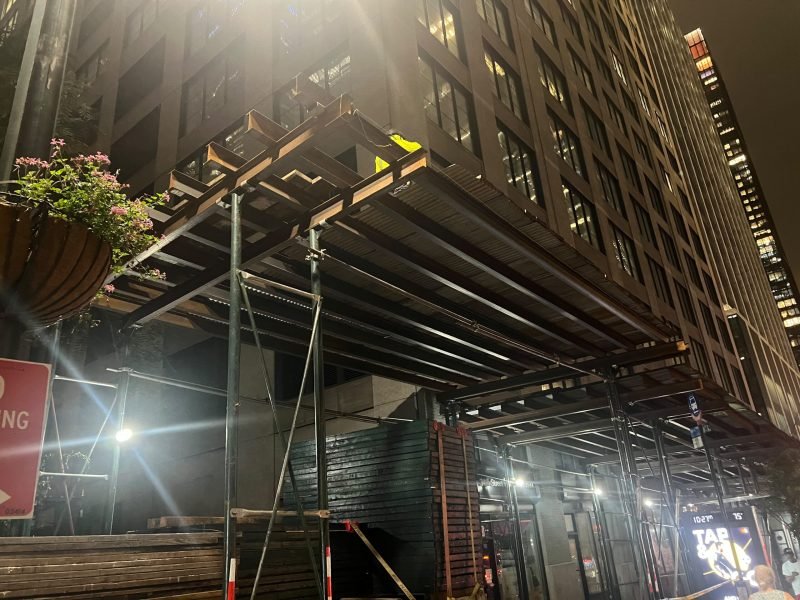
- Sidewalk protection — in many cases, a pipe scaffold needs to be paired with a sidewalk shed to protect pedestrians below, particularly on active retail or residential blocks.
- Wind loading — taller pipe scaffolds erected along open corridors near the waterfront (DUMBO, Greenpoint, Red Hook) need additional bracing to handle wind exposure.
- Tie-ins and anchoring — improper anchoring is one of the most common causes of scaffold failure. Every tie-in point should be inspected against the building’s structural capacity, not just bolted in wherever convenient.
- Public liability — scaffolds erected without proper permits or inspection documentation can expose property owners to fines and legal liability if an incident occurs.
Working with an experienced scaffolding contractor who understands these borough-specific realities reduces risk on all fronts — for the crew on the scaffold, the pedestrians below, and the property owner footing the bill.
Choosing the Right Pipe Scaffolding Provider in Brooklyn
Not every scaffolding company operates at the same standard. When evaluating a provider for a Brooklyn project, consider:
- Local experience — a company familiar with Brooklyn’s building stock and DOB procedures will anticipate issues a generic provider might miss. Learn more about our team and the experience behind every project we take on.
- Licensing and insurance — confirm the provider carries appropriate liability coverage and holds current NYC scaffolding licenses.
- Transparent estimating — reputable providers assess the site in person before quoting, rather than pricing blind.
- Track record on similar projects — ask for examples of comparable work, whether that’s a Brooklyn brownstone or a commercial project at scale.
- Responsiveness during the rental period — scaffolding needs change as a project progresses; a provider that’s slow to adjust configurations can stall the whole job.
Final Thoughts
Pipe scaffolding remains one of the most versatile and dependable systems available for Brooklyn construction and renovation work, precisely because it can be shaped around the borough’s varied architecture rather than forcing every job into the same mold. Getting it right, however, depends on working with a provider who understands both the engineering and the regulatory landscape specific to New York City.
For contractors, property managers, and homeowners planning a project in Brooklyn, partnering with an experienced local team from the outset helps avoid delays, keeps the job site safe, and ensures full compliance with DOB requirements from permit to teardown. For more insights on navigating NYC construction requirements, visit our scaffolding blog for the latest updates and guides.
Frequently Asked Questions
1. How long does it take to install pipe scaffolding on a Brooklyn building?
Installation timelines vary based on building height, facade complexity, and permit status, but most residential and small commercial jobs can be scaffolded within one to three days once permits and site assessments are complete.
2. Do I need a permit for pipe scaffolding in Brooklyn?
Any supported scaffold or sidewalk shed taller than 40 feet requires a permit from the NYC Department of Buildings before installation. Shorter scaffolds may still require documentation depending on the scope of work and building classification.
3. What’s the difference between pipe scaffolding and a sidewalk shed?
Pipe scaffolding is a work platform that gives crews elevated access to a building’s exterior, while a sidewalk shed is a protective structure built to shield pedestrians from falling debris during construction. The two are often used together on the same project.
4. How much does pipe scaffolding rental cost in Brooklyn?
Pricing depends on building height, scaffold configuration, rental duration, and site accessibility. A provider should always conduct a site visit before providing a firm quote rather than relying on a flat rate.
5. Is pipe scaffolding safe for older brownstone buildings?
Yes, when properly engineered. Pipe scaffolding’s modular design makes it well suited to the irregular facades and setbacks common in Brooklyn brownstones, provided tie-ins and load calculations account for the building’s specific structural condition.
Ready to Get Started?
Whether you’re restoring a Park Slope brownstone or managing a commercial buildout in Downtown Brooklyn, NYC Best Scaffold delivers pipe scaffolding solutions engineered for the borough’s unique construction landscape — fully compliant, professionally installed, and backed by decades of local experience.
Contact us today for a free, no-obligation estimate, or call (212) 719-1200 to speak with our team about your Brooklyn scaffolding project.