If you own, manage, or lease a building in New York City, chances are you’ll eventually need scaffolding — whether it’s for a facade repair, a new construction project, or a routine inspection mandated by the city. But not every scaffolding company operates the same way, and in a city as regulated and fast-moving as New York, the difference between a well-run contractor and a disorganized one can show up in blown timelines, DOB violations, or worse — safety incidents. This article walks through what scaffolding actually involves in New York, the rules that shape the industry, and the questions worth asking before you hire anyone.
Why New York City Treats Scaffolding Differently
Most cities treat scaffolding as a purely functional piece of construction equipment. New York treats it as a matter of public safety. Because sidewalks here are constantly packed with pedestrians, and because the city’s building stock skews old — much of it built before modern building codes existed — scaffolding isn’t optional in many situations. It’s legally required.
Two forces drive most of the demand:
Aging building envelopes. Brick, brownstone, and terra cotta facades don’t last forever. Water infiltration, freeze-thaw cycles, and decades of exposure eventually cause spalling, cracking, and loose material — all of which pose a risk to pedestrians below.
The Facade Inspection Safety Program (FISP), formerly Local Law 11. Buildings taller than six stories are legally required to have their facades inspected by a qualified professional every five years. If a facade is found to be unsafe, protective measures — usually a sidewalk shed — must go up almost immediately, sometimes staying in place for months or years while repairs are completed.
This regulatory backdrop is the reason scaffolding companies in New York need to be as fluent in Department of Buildings paperwork as they are in construction itself.
The Main Types of Scaffolding You’ll Encounter
Not all scaffolding looks or functions the same way. Here’s a breakdown of what New York scaffolding companies typically install.
Sidewalk Sheds
The green (or occasionally other colored) covered walkways found outside buildings under construction or repair. These structures protect pedestrians from falling debris and are mandatory whenever overhead work is happening above a public sidewalk, or when a facade has been flagged as hazardous. See our sidewalk shed services for details on installation timelines and permit handling.
Supported Scaffolding
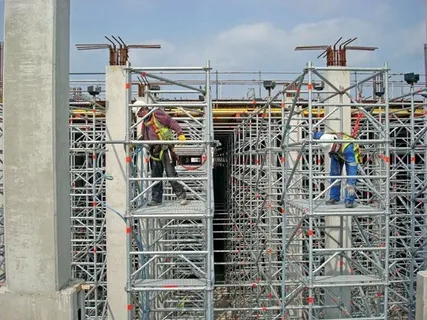
Built from the ground up using either frame systems or tube-and-coupler configurations, supported scaffolding gives workers direct access to a building’s facade for tasks like pointing, waterproofing, and window replacement. It’s the most common type used for mid-rise buildings and townhouses.
Suspended Scaffolding (Swing Stages)
Hung from the roof by cables rather than built from the ground, suspended scaffolds are typically used on taller buildings for facade pointing, caulking, and window work. Because these platforms carry workers many stories above the street, installation and operation must be overseen by a DOB-licensed master rigger. Learn more about our suspended scaffolding and swing stage options.
System Scaffolding
Modular, engineered scaffold systems are often chosen for larger commercial jobs because they assemble faster and adapt more easily to complex building shapes than traditional frame scaffolding.
Shoring
Some companies also handle temporary shoring for excavation and foundation work — a related but separate discipline that typically requires its own engineering approval.
Knowing which category your project falls into is the first step to having a productive conversation with any contractor you’re considering.
The Regulatory Side: What Every NYC Scaffolding Job Requires
This is where scaffolding companies in New York separate themselves from generalist contractors elsewhere. A few of the non-negotiables:
DOB Permits. Nearly every sidewalk shed or supported scaffold requires a permit filed with the Department of Buildings. For taller or more complex jobs, the plans often need to be stamped by a licensed engineer.
Licensed Riggers. Suspended scaffolding cannot legally be installed or operated without a DOB-licensed master rigger supervising the work.
Insurance. Because scaffolding sits directly above public sidewalks, contractors are required to carry substantial liability coverage, and building owners often need to be added as additional insureds on the policy.
Ongoing Inspections. Scaffolding that remains standing for an extended period — which is common with sidewalk sheds tied to FISP repairs — must be periodically inspected and documented, not simply installed and forgotten.
Site Safety Coordination. On larger construction projects with a designated Site Safety Manager, scaffolding plans need to be folded into the broader site safety plan rather than treated as a standalone item.
A scaffolding company that understands this regulatory landscape will save you significant time and reduce your exposure to fines, stop-work orders, or liability if something goes wrong. Our DOB permitting and compliance services are built to take that burden off property owners entirely.
Questions to Ask Before Hiring a Scaffolding Company
Given how much is riding on the paperwork and the physical installation, it’s worth vetting a company thoroughly before signing anything.
- Do you handle DOB permit filings directly, or does that fall on us? The best companies manage this end-to-end.
- Can you provide proof of current insurance and licensing for your riggers? Don’t take this on faith — ask for documentation.
- Who handles ongoing inspections once the scaffold is up? Standing scaffolding requires maintenance, not just installation.
- Do you work with a licensed structural engineer for stamped drawings? This matters for taller or more complex installations.
- What’s included in your pricing — erection, monthly rental, and dismantling — and what isn’t? Vague, bundled quotes are a red flag.
- How familiar are you with our specific borough’s DOB office? Each borough office has its own quirks in how filings are processed, and local experience speeds things up.
A company that answers these questions clearly and confidently, without hedging, is generally one worth trusting with your project.
What Affects the Cost of Scaffolding in New York
Pricing isn’t one-size-fits-all, and it typically depends on:
- Scaffold type — sidewalk sheds, supported systems, and suspended platforms are priced differently based on materials and labor involved.
- Height and linear footage — larger jobs require more material, more labor hours, and often more complex engineering.
- Duration — most scaffolding contracts include an installation fee plus a recurring monthly rental charge, so a project lasting several months will carry different economics than a short-term job.
- Permit complexity — jobs requiring engineer-stamped drawings or a full site safety plan will cost more upfront.
- Site accessibility — narrow NYC streets, limited staging space, and building setbacks can all add labor time.
Because these variables shift so much from project to project, most reputable scaffolding companies will want to walk the site in person before providing a firm number, rather than quoting blind over the phone.
Bringing It All Together
Scaffolding in New York isn’t just a construction detail — it’s a compliance requirement, a public safety measure, and often a multi-month (or multi-year) commitment tied to a building’s facade condition. The company you choose to handle it should be as comfortable navigating Department of Buildings paperwork as they are erecting steel.
Whether you’re dealing with a FISP-mandated sidewalk shed, planning a facade restoration that calls for supported scaffolding, or need suspended access for a high-rise, the right partner will handle the permitting, the installation, and the ongoing maintenance without turning any of it into your problem.
NYC Best Scaffold works with property owners, managers, and contractors across the five boroughs to deliver exactly that — licensed, insured, DOB-compliant scaffolding solutions from the first site visit through final dismantling.
Ready to discuss your project? Get in touch with our team for a free site visit, or explore our full list of scaffolding services to find the right fit for your building.